Banks Are Pulling Back From Small Business Equipment Lending: Here’s Who’s Stepping In
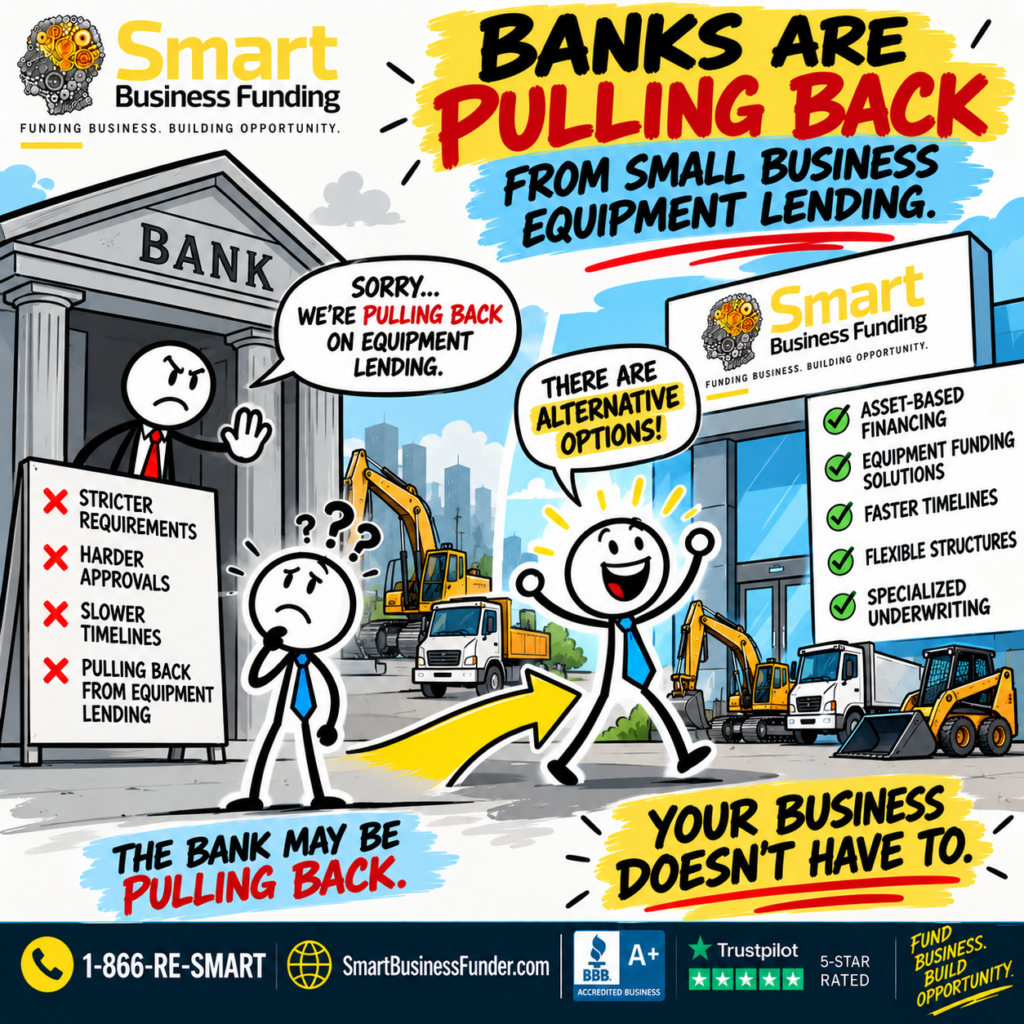
A notable shift is underway in equipment finance: traditional banks are pulling back from small business lending, creating room for independent lenders and new bank-independent lender partnerships to fill the gap. Industry leaders in the equipment finance space have described this directly, framing it as an opportunity for independent lenders’ creative structuring and relationship-driven approach to reach markets banks increasingly can’t or won’t serve directly.
Why Banks Are Retreating From This Segment
Banks pulling back from small business equipment lending isn’t a single, isolated decision, it reflects a broader pattern of tightening standards and shifting risk appetite that’s played out across small business lending generally in recent years. Regulatory considerations, capital requirements, and the relatively higher servicing cost of smaller-ticket equipment loans compared to larger commercial transactions all factor into why banks have increasingly deprioritized this specific segment, even as overall equipment finance volume and performance remain strong industry-wide.
This pattern connects directly to what we’ve covered in why 76% of small businesses are now bypassing traditional banks entirely for financing more broadly, equipment lending is simply one specific segment within that larger shift, following the same underlying dynamic of banks retreating from smaller, harder-to-serve transactions.
Who’s Actually Stepping Into the Gap
Independent lenders, non-bank finance companies specializing in equipment-specific financing, have become the primary beneficiaries of this shift, alongside a growing pattern of banks themselves partnering with independent lenders to reach markets they can’t access directly on their own. Deregulation in the space has opened new pathways for this kind of collaboration, with banks increasingly working alongside independent lenders rather than only competing with them.
Private credit more broadly has also expanded significantly into this space, the U.S. private credit market currently sits around $3 trillion, with projections suggesting growth toward $5 trillion by 2029, as businesses across the board seek faster, more flexible financing options than traditional banks have been willing or able to provide.
Why This Shift Is Generally Good News for Small Business Owners
A bank pulling back from a specific lending segment sounds, on its face, like bad news for access to capital. In practice, the independent lenders and private credit providers stepping into that gap have often built faster, more flexible underwriting specifically because they aren’t constrained by the same regulatory capital requirements and standardized risk models that shaped bank lending in the first place. This is part of why revenue-based and asset-based alternatives have grown so quickly, they’re often simply better suited to how small businesses actually operate. Our guide to what asset-based financing actually is covers how this works specifically for equipment, inventory, and receivables-based structures.
What This Means If You’re Currently Relying on a Bank Relationship
If your business has historically financed equipment through a bank relationship, it’s worth understanding that the landscape underneath that relationship has shifted, even if your specific bank hasn’t yet pulled back from your segment directly. A few things worth doing given this shift:
- Don’t assume a bank denial reflects your business’s health. It’s increasingly likely to reflect the bank’s broader retreat from this lending category rather than anything specific about your business, our piece on why so many line of credit applicants get denied despite record demand covers a closely related dynamic.
- Research independent, equipment-specific lenders directly, rather than assuming a bank is your only option for financing equipment. Smart Business Funding’s own equipment financing option is structured around exactly this kind of specialized, asset-specific underwriting.
- Compare speed as well as terms. Bank equipment financing timelines have historically run weeks; independent lenders in this space often move considerably faster, which matters if your equipment need has any real urgency behind it. Our breakdown of types of business funding ranked by speed covers how equipment financing compares to other options on timeline specifically.
Illustrative Composite Scenario (not an actual client, for explanatory purposes only): A regional manufacturing business’s longtime bank declines to finance a planned equipment upgrade, citing a broader pullback from smaller equipment transactions rather than any specific concern about the business itself. Rather than delaying the upgrade indefinitely, the business researches independent equipment financing options built specifically around this kind of asset-based underwriting, securing financing on a considerably faster timeline than the bank’s original process would have allowed.
What This Trend Suggests Going Forward
Given the scale of private credit growth projected through 2029, this shift away from banks and toward independent and alternative lenders in equipment finance specifically is likely to continue rather than reverse. Businesses that build relationships with independent, equipment-specialized lenders now are likely to find themselves better positioned for future equipment needs than those still assuming a traditional bank relationship is their only path.
How Smart Business Funding Approaches This Shift
Smart Business Funding’s equipment financing is built around exactly the kind of specialized, asset-specific underwriting increasingly filling the gap left by banks, alongside the revenue-based Direct Fund Program for needs that aren’t equipment-specific. See the full process on the how it works page, review funding by business type on the industries page, or apply now.
Frequently Asked Questions
Why are banks pulling back from small business equipment lending? Regulatory considerations, capital requirements, and the relatively higher servicing cost of smaller-ticket equipment transactions have led many banks to deprioritize this specific segment, even as overall industry equipment finance volume remains strong.
Who is filling the gap left by banks? Independent, non-bank equipment finance companies and a growing private credit market, currently around $3 trillion and projected to reach $5 trillion by 2029, are increasingly stepping into this space, sometimes in direct partnership with banks themselves.
Is it a bad sign if my bank won’t finance my equipment purchase? Not necessarily about your specific business, it’s increasingly likely to reflect a broader bank pullback from this lending category rather than a judgment about your business’s health.
Are independent equipment lenders slower or faster than banks? Often faster, independent lenders in this space have generally built underwriting specifically designed to move more quickly than traditional bank processes.
Should I still try my bank first for equipment financing? It doesn’t hurt to ask, but it’s worth researching independent, equipment-specialized lenders in parallel rather than waiting on a bank process that may ultimately decline the request for reasons unrelated to your business.
Looking for equipment financing built around your specific timeline? Apply now or call 1-866-Re-Smart. You can also reach the team at contact us.