Feast, Famine, Repeat: Surviving the Gap Between Projects Without Panicking
You just wrapped the biggest project of the quarter. The team is proud of it. The client is happy. And for the first time in weeks, the calendar looks… empty.
That quiet stretch after a big win isn’t a warning sign. It’s the shape of the business you’re in.
Nobody Warns You About the Part After the Win
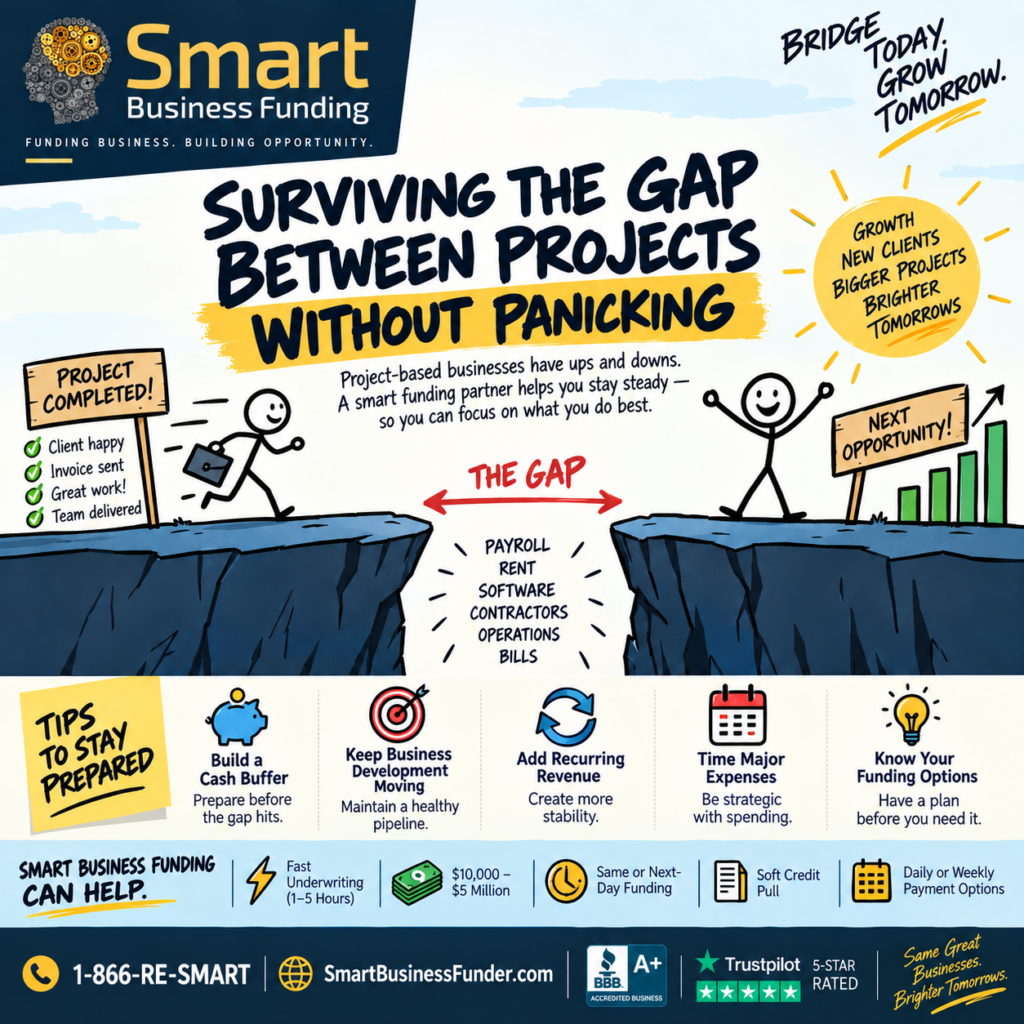
Project-based businesses — agencies, IT consultancies, production companies — don’t get paid on a smooth, predictable curve. Revenue comes in waves: a big engagement lands, the team goes heads-down, invoices go out, and then there’s a gap before the next one starts. During that gap, payroll, rent, and software bills don’t pause just because the pipeline is between projects.
It’s a strange kind of stress, because it doesn’t come from anything going wrong. The last project went well. The team did great work. And yet the bank balance a few weeks later tells a tighter story than the client testimonial does. That disconnect — good work, quiet month — is exactly what makes this feel personal when it isn’t.
Why This Is Structural, Not a Sign of Failure
It’s worth saying plainly: feast-or-famine isn’t a symptom of a badly run agency. It’s the default shape of project-based revenue.
A few reasons this cycle exists no matter how well a business is run:
- Projects have a start and an end. Unlike a subscription business, revenue doesn’t renew automatically the day after delivery — the next engagement has to be sold, scoped, and staffed from scratch.
- Sales and delivery compete for the same people. When a team is heads-down delivering a big project, business development often slows, which means the next project starts later than it otherwise would.
- Client budgets and timelines aren’t yours to control. A client’s own fiscal year, internal approvals, or planning cycle can push a signed deal’s start date by weeks, regardless of how ready your team is.
- Big wins concentrate revenue. Landing one large engagement is good news, but it also means more of the year’s revenue is tied to fewer, bigger, more spaced-out milestones instead of a steady drip.
None of that reflects a problem with the work. It’s the mechanics of selling and delivering projects rather than a subscription or retainer. Recognizing that early is what separates agencies that plan for the gap from ones that panic every time it shows up.
Between projects right now and feeling the squeeze? Check your eligibility now →
Practical Ways to Bridge the Gap
Funding is one tool for this, but it’s not the only one — and the strongest agencies usually combine a few of these rather than leaning on just one.
Build a cash buffer sized to your actual cycle, not a generic rule of thumb. A three-month buffer means something different for an agency whose gaps run two weeks than one whose gaps run two months. Look at your last four to six project cycles and size the buffer to the longest real gap you’ve seen, not an average that hides the worst month.
Stagger business development so it never fully stops. The agencies that feel the gap least aren’t the ones with the biggest single wins — they’re the ones who keep a thin, steady stream of pipeline activity running even during a heads-down delivery push, so the next project doesn’t start from zero.
Diversify toward some retainer or recurring revenue, even a small amount. A handful of ongoing retainer clients alongside project work doesn’t eliminate the feast-or-famine pattern, but it raises the floor during the quiet stretch, so the gap is a dip rather than a cliff.
Time discretionary spending to your cycle, not the calendar. Big software purchases, new hires, or office upgrades land more safely right after an invoice clears than during the gap before the next one — an obvious point, but one that’s easy to lose track of mid-project.
Know your bridge option before you need it. Whether that’s a cash reserve, a line of credit you can draw on as needed, or working capital financing sized to revenue, the businesses that handle the gap calmly are usually the ones who lined up the option ahead of the stressful month, not during it.
Where Funding Fits — As a Bridge, Not a Fix for Everything
To be direct about it: funding won’t fix a sales pipeline problem, and it’s not a substitute for building the buffer and pipeline habits above. What it does well is cover the specific, timing-based gap between a project ending and the next one paying out, without forcing a bad decision under pressure — delaying a hire, cutting a contractor early, or drawing down a personal account.
That’s the specific case the Direct Fund Program is built for in media, marketing, and technology businesses: revenue-based financing sized to what a business already earns, not a fix for a business that isn’t working.
- Funding amount: $10,000 to $5 million, sized to monthly revenue
- Time to funds: Same business day or the next business day once approved
- Underwriting: 1 to 5 hours in most cases — see the full how it works breakdown
- Repayment: A fixed daily or weekly amount, known in advance
- Credit requirements: Scores around 500 and up typically considered, checked with a soft pull that doesn’t affect your credit score
Two composite examples show how this plays out in practice.
Illustrative Composite Scenario
A software consultancy completed a major client engagement and invoiced on standard net-45 terms, but payroll for the developers who did the work was due well before that invoice would be paid. Tech services funding covered payroll on schedule, repaid once the invoice cleared.
Illustrative Composite Scenario
A small video production company won a significant commercial production contract, but crew day rates and equipment rental had to be paid before the client’s payment arrived upon final delivery. Media production funding covered those upfront costs, keeping the production on schedule.
These are composite examples built from patterns commonly seen across media, marketing, and technology businesses. They are not records of specific clients, and every business’s outcome depends on its own financials. More scenarios, including a full breakdown of fronted ad spend and client billing lag, are on the media, marketing & technology funding page.
If the gap you’re bridging is really about scaling up for a bigger next chapter rather than just surviving the quiet stretch, that’s closer to a growth and expansion capital conversation than a bridge-financing one — worth flagging to a funding specialist so you’re matched to the right structure. Call 1-866-RE-SMART to talk through where your business actually falls.
Qualifying: Is This a Fit for Your Business?
Funding through the Direct Fund Program is generally a fit for businesses that are fundamentally healthy but uneven between projects — not a rescue plan for one that isn’t working. The baseline:
- At least 1 year in business
- $50,000 or more in monthly revenue
- Credit score around 500 and up (soft pull, no impact to your score)
If that sounds like your agency between engagements rather than your agency in trouble, it’s worth reviewing the specific numbers with a funding specialist to confirm the timing and repayment schedule actually fit your project cycle — not just qualifying on paper. That’s exactly why cash-flow gaps like this are worth funding rather than white-knuckling through them.
The Gap Isn’t the Problem — Panicking Through It Is
Feast-or-famine is the normal texture of project-based work, not a verdict on how well you’re running your business. The agencies and consultancies that handle it well aren’t the ones who never hit a quiet month — they’re the ones who planned for it: a buffer sized to their real cycle, pipeline that never fully stops, and a bridge option they know about before they need it.
Check your eligibility now → or call 1-866-RE-SMART to talk through your specific project cycle with a funding specialist — checking doesn’t affect your credit score. Prefer to ask questions first? Contact us.
Frequently Asked Questions
Is feast-or-famine cash flow a sign my agency is being run poorly? Not on its own. It’s the structural default for project-based businesses — revenue arrives in waves tied to when projects start and end, not on a steady, subscription-like schedule.
What can I do besides funding to manage the gap between projects? Sizing a cash buffer to your actual longest gap, keeping business development running even during heads-down delivery, adding some retainer or recurring revenue, and timing discretionary spending to your cycle all help before funding becomes necessary.
Is funding a good fit for a business with feast-or-famine project cycles? It can be, particularly when a business is fundamentally healthy but experiences uneven revenue between projects. It’s worth reviewing the specific numbers with a funding specialist to confirm the timing and repayment schedule fit the business’s actual project cycle.
How fast can funding cover the gap between projects? Through the Direct Fund Program, underwriting typically takes 1 to 5 hours, with funds generally available the same or next business day once approved.
Do I need strong personal credit to qualify? Not necessarily. Approval is based primarily on the business’s revenue and cash flow rather than personal credit history. Credit scores around 500 and up are typically considered, and eligibility checks use a soft credit pull that doesn’t affect your credit score.
What if the gap keeps happening every few months, not just once? A recurring pattern is often better served by standing access, like a line of credit, rather than reapplying every time a project wraps. More scenarios are covered in the full FAQ library.