Why “Cheapest Money” Is the Worst Funding Strategy in 2026
For decades, business owners were taught one rule about funding: always take the cheapest money.
In 2026, that rule is quietly destroying businesses.
What looks cheap on paper often turns out to be the most expensive mistake once delays, uncertainty, missed opportunities, and cash-flow strain are factored in. This article explains why chasing “cheapest money” is the wrong strategy in 2026—and what smart businesses are doing instead.
The Myth of “Cheap Money”
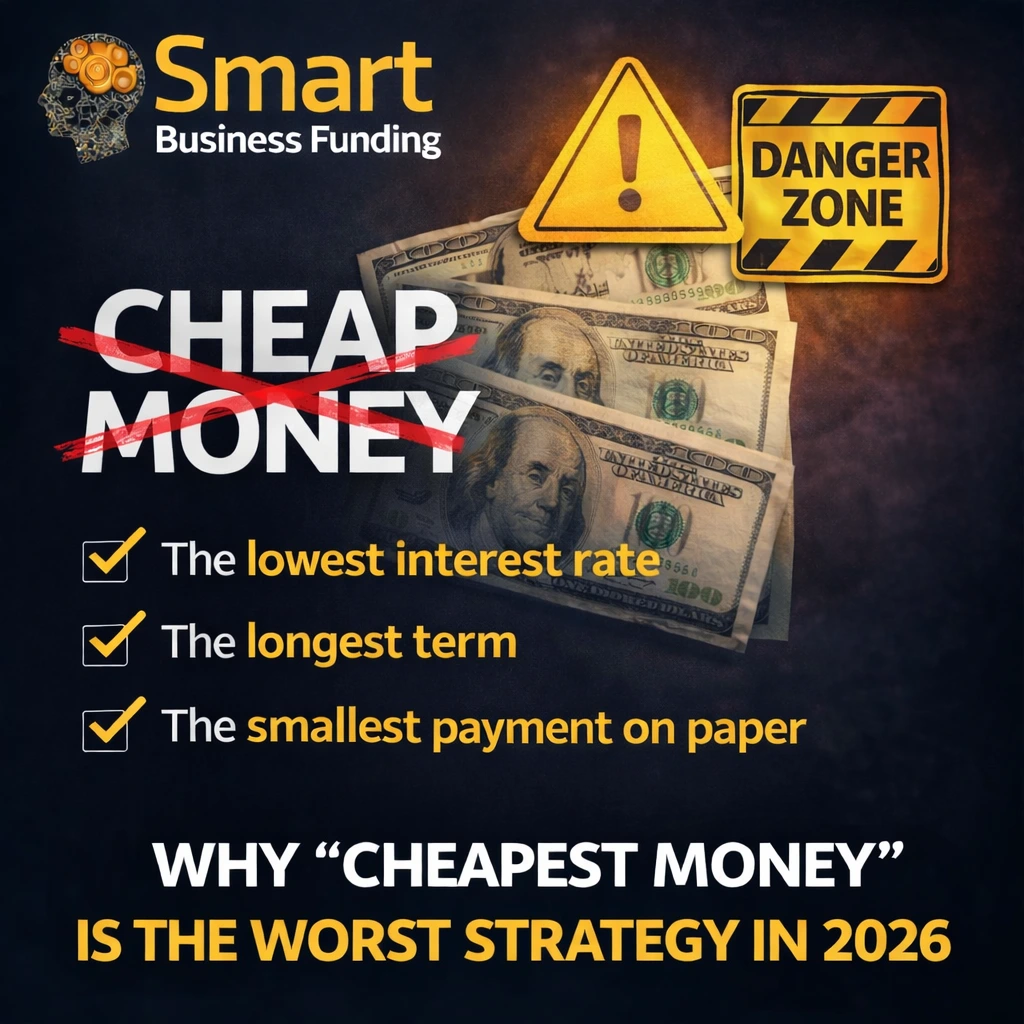
“Cheap money” usually means:
- The lowest interest rate
- The longest term
- The smallest payment on paper
But in real life, funding is not just about math. It’s about timing, certainty, and execution.
In 2026, businesses don’t lose because their capital costs are slightly higher—they lose because capital shows up too late, falls apart, or doesn’t fit their cash flow.
Problem #1: Cheap Money Is Slow Money
The cheapest funding options are almost always the slowest.
They come with:
- Lengthy underwriting
- Endless document requests
- Multiple approval layers
- Weeks or months of waiting
In a fast-moving economy, slow capital costs businesses:
- Inventory opportunities
- Expansion windows
- Vendor leverage
- Market share
Money that arrives too late isn’t cheap—it’s useless.
Problem #2: Cheap Money Comes With Fragile Approvals
In 2026, many “cheap” approvals are conditional, not real.
Business owners often experience:
- Last-minute term changes
- Deals being reshopped
- Approvals pulled after weeks of waiting
- Sudden rejections due to minor issues
This uncertainty forces businesses to pause decisions, delay growth, and operate defensively.
Certainty beats cheap every time.
Problem #3: Cheap Money Ignores Cash Flow Reality
Low-cost funding often assumes:
- Stable, predictable revenue
- Zero seasonality
- Perfect payment timing
That’s not how real businesses operate.
When payments don’t align with cash flow:
- Stress increases
- Operations tighten
- Owners start juggling expenses
- One bad week creates a chain reaction
Funding that fits cash flow—even at a higher cost—often keeps a business healthier and more profitable.
Problem #4: Cheap Money Limits Flexibility
Cheap money is rigid.
It usually:
- Locks businesses into strict terms
- Penalizes early payoffs
- Prevents additional funding
- Leaves no room for growth adjustments
In 2026, businesses need flexibility, not handcuffs.
Markets change fast. Expenses shift. Opportunities appear unexpectedly. Funding must adapt, not restrict.
Problem #5: Cheap Money Makes Owners Hesitate
When business owners chase the cheapest deal, they often:
- Overanalyze
- Delay decisions
- Miss momentum
- Lose confidence
Meanwhile, competitors with faster, more reliable capital move forward.
In 2026, hesitation is expensive.
What Smart Businesses Choose Instead in 2026
Winning businesses have changed their funding mindset.
They prioritize:
- Speed over perfection
- Certainty over theoretical savings
- Cash-flow alignment over rigid structures
- Reliable partners over one-time transactions
They view funding as a strategic tool, not a line item.
The Real Cost of “Cheap” Funding
When you add up:
- Lost opportunities
- Delayed growth
- Operational stress
- Time wasted chasing approvals
The cheapest money often ends up being the most expensive choice.
In contrast, funding that arrives quickly, works with cash flow, and supports growth often produces a much higher return—even if the cost looks higher upfront.
The 2026 Funding Rule That Actually Works
Here’s the rule successful business owners follow in 2026:
The best funding is the money that shows up on time, stays solid, and helps you move forward.
Not the cheapest.
Not the slowest.
Not the most complicated.
Final Thoughts: Capital Is Leverage, Not a Trophy
In 2026, funding isn’t about bragging rights over low rates—it’s about execution.
Businesses that win:
- Move fast
- Plan ahead
- Choose certainty
- Use capital intentionally
If your funding strategy is still based on chasing the cheapest money, it may be time to rethink the cost of waiting.
Because in today’s economy, cheap money can be very expensive.