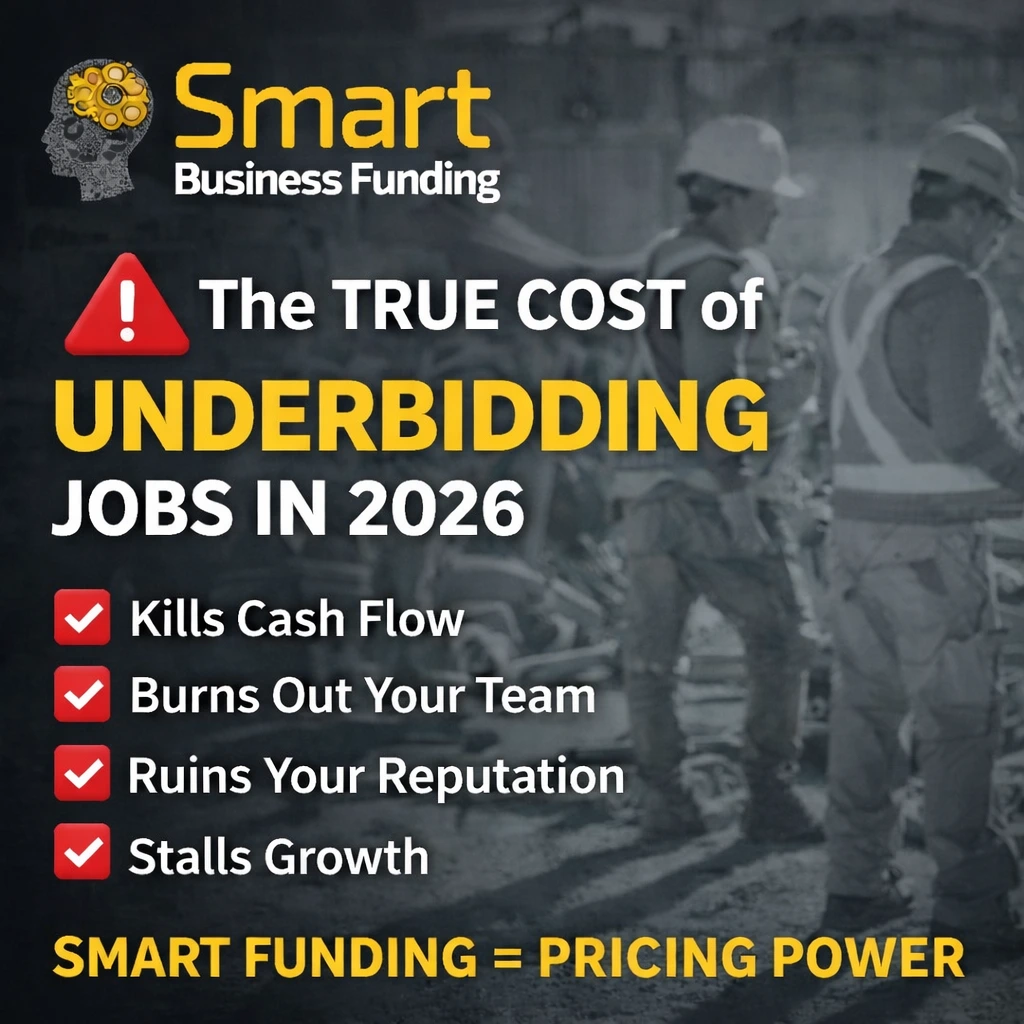
The True Cost of Underbidding Jobs in 2026 — And Why Smart Funding Helps
Underbidding jobs has always been risky.
In 2026, it’s outright dangerous.
With higher labor costs, volatile material pricing, tighter margins, and slower payments, underbidding is no longer a “temporary sacrifice” — it’s one of the fastest ways businesses quietly fail.
Contractors, service providers, and operators across construction, trucking, landscaping, auto repair, and other trades are learning the hard way that winning the job doesn’t mean winning the business.
This article breaks down the real cost of underbidding jobs in 2026, why so many businesses still do it, and how smart funding changes the equation.
Why Underbidding Is More Dangerous in 2026 Than Ever
In 2026, businesses are facing a perfect storm:
- Rising wages and labor shortages
- Material and supply-chain volatility
- Higher insurance and compliance costs
- Slower customer and GC payments
- Increased competition driving prices down
The margin for error is thinner than ever.
When you underbid today, there’s no buffer left.
What used to be a pricing mistake has become a cash-flow crisis.
The Hidden Costs of Underbidding Jobs in 2026
Most business owners only look at the top-line revenue.
The real damage happens underneath.
1. Cash Flow Bleeds Before the Job Is Finished
Underbidding forces you to:
- Front labor costs
- Buy materials upfront
- Cover fuel, insurance, and overhead
- Wait weeks or months to get paid
In 2026, delayed payments + thin margins = negative cash flow, even on “busy” schedules.
Many companies fail while fully booked.
2. You Train Clients to Expect Cheap Pricing
Once you underbid:
- Clients push back on fair pricing later
- Competitors undercut you again
- You get stuck servicing low-margin accounts
This creates a race to the bottom that you can’t win.
3. Quality Suffers — And So Does Your Reputation
Thin margins force tough decisions:
- Fewer crew members
- Cheaper materials
- Rushed timelines
- Burned-out staff
In 2026, online reviews, referrals, and reputation matter more than ever.
One underbid job can cost you years of future revenue.
4. Growth Becomes Impossible
Underbidding traps you in survival mode:
- No cash to invest in equipment
- No capital for hiring
- No funds for marketing
- No ability to scale
You stay busy — but stuck.
5. One Bad Job Can Break the Business
In past years, a bad job hurt.
In 2026, one underbid contract can:
- Drain reserves
- Delay payroll
- Force emergency borrowing
- Kill momentum
Many businesses don’t fail gradually — they fail suddenly.
Why Businesses Still Underbid in 2026
Despite the risks, underbidding is everywhere. Why?
- Fear of losing the job
- Desperation for cash flow
- Pressure from competitors
- Waiting on funding or approvals
- No financial buffer
Underbidding isn’t a pricing strategy — it’s often a capital problem.
The Real Solution: Fix the Funding, Not the Price
Businesses don’t underbid because they want to.
They underbid because they need cash now.
This is where smart funding changes everything.
How Smart Funding Helps You Stop Underbidding
1. You Can Price Jobs for Profit — Not Survival
With working capital in place:
- You don’t need to “buy” the job
- You can walk away from bad deals
- You bid based on real costs, not desperation
Profit-first pricing becomes possible again.
2. You Can Front Costs Without Panic
Smart funding allows you to:
- Cover payroll
- Buy materials upfront
- Handle fuel, insurance, and overhead
- Absorb payment delays
This removes the pressure to slash pricing just to stay afloat.
3. You Win Better Jobs — Not Just More Jobs
Well-funded businesses:
- Target higher-quality clients
- Take on larger contracts
- Negotiate from strength
- Scale intentionally
In 2026, capacity + capital = leverage.
4. You Protect Your Team and Your Brand
Healthy margins mean:
- Better staff retention
- Higher-quality work
- Stronger reputation
- Repeat business and referrals
Underbidding destroys brands.
Smart funding protects them.
5. You Grow Instead of Grinding
When cash flow is stable:
- Growth becomes strategic
- Expansion becomes possible
- Equipment upgrades make sense
- Long-term planning replaces stress
Industries Most Hurt by Underbidding in 2026
Underbidding is especially damaging in:
- Construction & contracting
- Trucking & logistics
- Landscaping & outdoor services
- Auto repair & detailing
- Property maintenance
- Hospitality renovations
These industries carry high upfront costs and delayed payments, making funding essential.
The Bottom Line: Underbidding Is a Funding Problem
In 2026, underbidding isn’t about being competitive.
It’s about being underfunded.
Businesses that continue to underbid will:
- Stay busy but broke
- Burn out teams
- Lose quality clients
- Eventually stall or collapse
Businesses that fix their funding:
- Price confidently
- Grow sustainably
- Outlast competitors
Final Thought: Smart Funding Creates Pricing Power
You don’t need cheaper prices.
You need stronger capital.
Smart Business Funding helps businesses:
- Maintain cash flow
- Price for profit
- Handle delays
- Scale without desperation
In 2026, the businesses that win aren’t the cheapest —
They’re the best funded.