
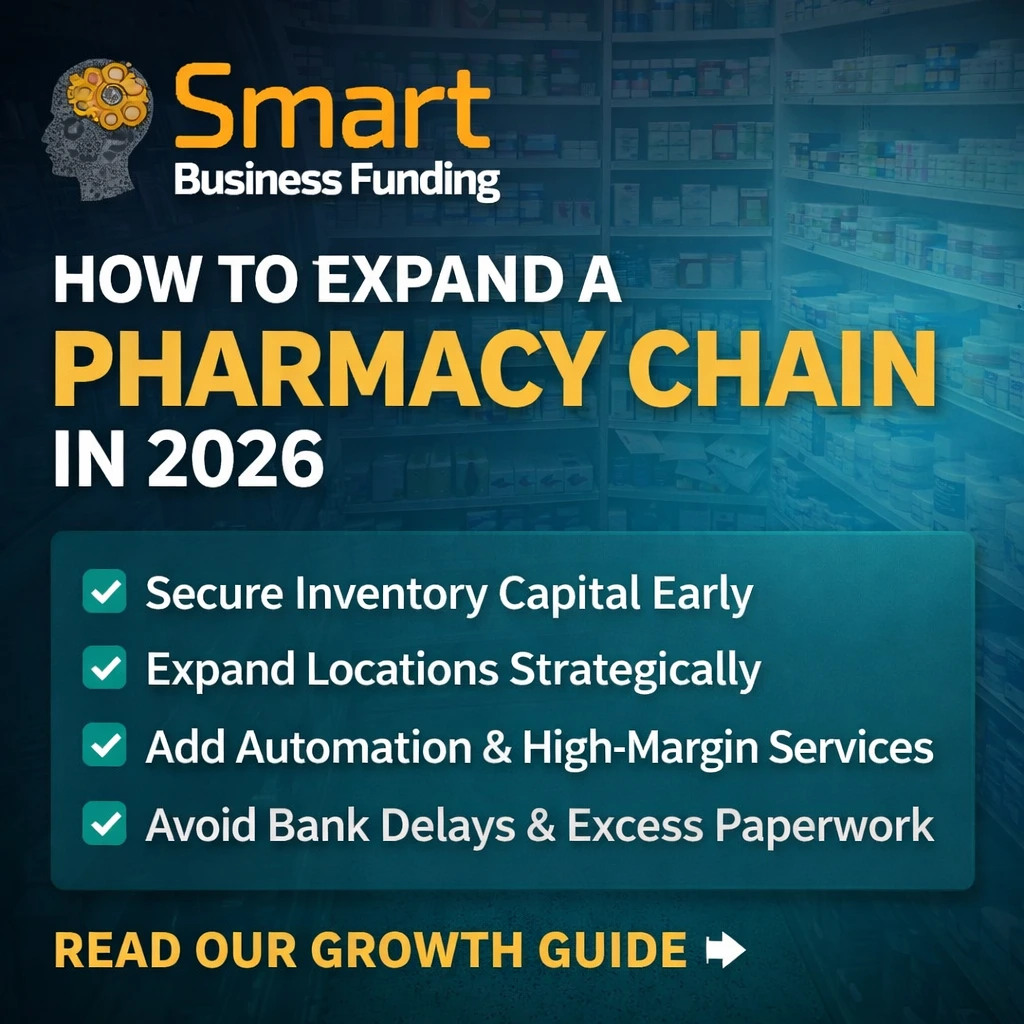
How to Expand a Pharmacy Chain in 2026: A Complete Growth Guide
Expanding a pharmacy chain in 2026 is no longer just about opening more locations. Rising drug costs, tighter regulations, staffing shortages, insurance delays, and increased competition from big-box retailers and online pharmacies mean growth now requires speed, strategy, and capital flexibility.
The pharmacies that win in 2026 will be the ones that plan expansion before cash flow becomes a bottleneck — not after.
This guide walks through exactly how to expand a pharmacy chain in 2026, the mistakes to avoid, and how smart operators are funding growth without slowing down.
Why 2026 Is a Critical Year for Pharmacy Expansion
Several macro trends are shaping pharmacy growth in 2026:
- Increased demand for local, specialty, and compounding pharmacies
- Continued insurance reimbursement delays
- Higher inventory costs due to supply-chain volatility
- Growing margins in specialty meds, vaccines, and clinical services
- Consumer preference for convenient neighborhood pharmacies over big chains
Bottom line: demand is there — but only pharmacies with strong capital access can scale fast enough to capture it.
Step 1: Choose the Right Expansion Model
Not all pharmacy expansions look the same. In 2026, the most successful chains are using hybrid growth models.
Common Expansion Options:
- Opening new brick-and-mortar locations
- Acquiring underperforming independent pharmacies
- Adding specialty pharmacy services
- Launching long-term care (LTC) or institutional pharmacy divisions
- Expanding delivery, telepharmacy, and automation
Pro tip: Expansion works best when each new location or service adds recurring prescription volume, not just foot traffic.
Step 2: Lock Down Inventory Funding Early
Inventory is the largest cash drain during pharmacy expansion.
In 2026, pharmacies are facing:
- Larger minimum order requirements
- Higher upfront costs for specialty medications
- Slower insurance reimbursements
Waiting for reimbursements to fund inventory is one of the biggest growth killers.
Smart pharmacies do this instead:
- Secure upfront working capital
- Separate inventory funding from operational cash
- Scale purchasing power before opening new locations
This allows pharmacies to open fully stocked, not gradually — which directly impacts patient retention and provider referrals.
Step 3: Expand Locations Without Bank Delays
Traditional banks remain slow, conservative, and documentation-heavy — especially for pharmacies with:
- Insurance receivables
- Rapid growth
- Multiple locations
In 2026, expansion speed matters more than interest rates.
Growth-focused pharmacies prioritize:
- Fast approvals
- Minimal paperwork
- Flexible repayment tied to revenue
- Capital that doesn’t restrict future borrowing
The goal is momentum, not perfect financing terms.
Step 4: Invest in Automation and Technology
Pharmacy chains that scale profitably in 2026 invest early in automation.
High-ROI upgrades include:
- Automated dispensing systems
- Inventory management software
- E-prescription optimization
- Central fill operations
- Compliance and audit automation
These investments:
- Reduce staffing pressure
- Increase script volume per location
- Improve compliance
- Lower long-term operating costs
Expansion without automation = higher overhead and thinner margins.
Step 5: Solve Staffing Before You Scale
Labor shortages are still one of the biggest pharmacy challenges in 2026.
Expanding without a staffing plan leads to:
- Burnout
- Compliance risks
- Poor customer experience
Smart chains:
- Budget for higher wages upfront
- Invest in technician training
- Use automation to reduce pharmacist workload
- Centralize administrative functions
Staffing issues should be solved before the grand opening — not after.
Step 6: Add High-Margin Services Before Opening New Locations
Many pharmacy owners expand locations too early — when they should first expand services.
High-margin services in 2026 include:
- Specialty medications
- Compounding
- Vaccination programs
- Long-term care contracts
- Clinical and diagnostic services
Adding these services increases revenue per location, making future expansion easier and less risky.
Step 7: Plan for Compliance at Scale
Compliance becomes exponentially more complex as pharmacy chains grow.
Expansion increases exposure to:
- DEA audits
- State board inspections
- Insurance audits
- HIPAA risks
In 2026, compliance failures can shut down growth overnight.
Best practices:
- Standardize procedures across locations
- Centralize compliance oversight
- Invest in audit-ready systems
- Build compliance costs into expansion budgets
Step 8: Don’t Let Cash Flow Lag Kill Momentum
Many pharmacy chains fail during expansion not because of demand — but because cash flow lags behind growth.
Common cash flow traps:
- Insurance reimbursement delays
- High upfront inventory costs
- Build-out expenses
- Marketing and staffing ramp-up
Successful chains plan for cash flow gaps, not just profitability.
Common Pharmacy Expansion Mistakes to Avoid in 2026
- Expanding too slowly and losing market share
- Relying only on bank financing
- Underestimating inventory costs
- Ignoring automation
- Expanding locations before maximizing margins
- Failing to plan for compliance complexity
- Waiting until cash flow becomes a problem
Final Thoughts: Expansion Favors the Prepared
Expanding a pharmacy chain in 2026 isn’t about being the biggest — it’s about being the fastest, most efficient, and best funded.
Pharmacies that:
- Secure capital early
- Plan for inventory and reimbursement gaps
- Invest in automation
- Choose flexible funding
will outpace competitors who are still waiting on approvals.
Growth in 2026 rewards decisiveness.
Ready to Expand Your Pharmacy Chain?
Smart Business Funding works with pharmacy owners who want to expand without delays, equity loss, or red tape.
If you’re planning to:
- Open new locations
- Acquire another pharmacy
- Scale inventory or services
- Upgrade technology
The right funding strategy can make the difference between slow growth and rapid expansion.