Can a Tutoring Center Get Funding With No Collateral?
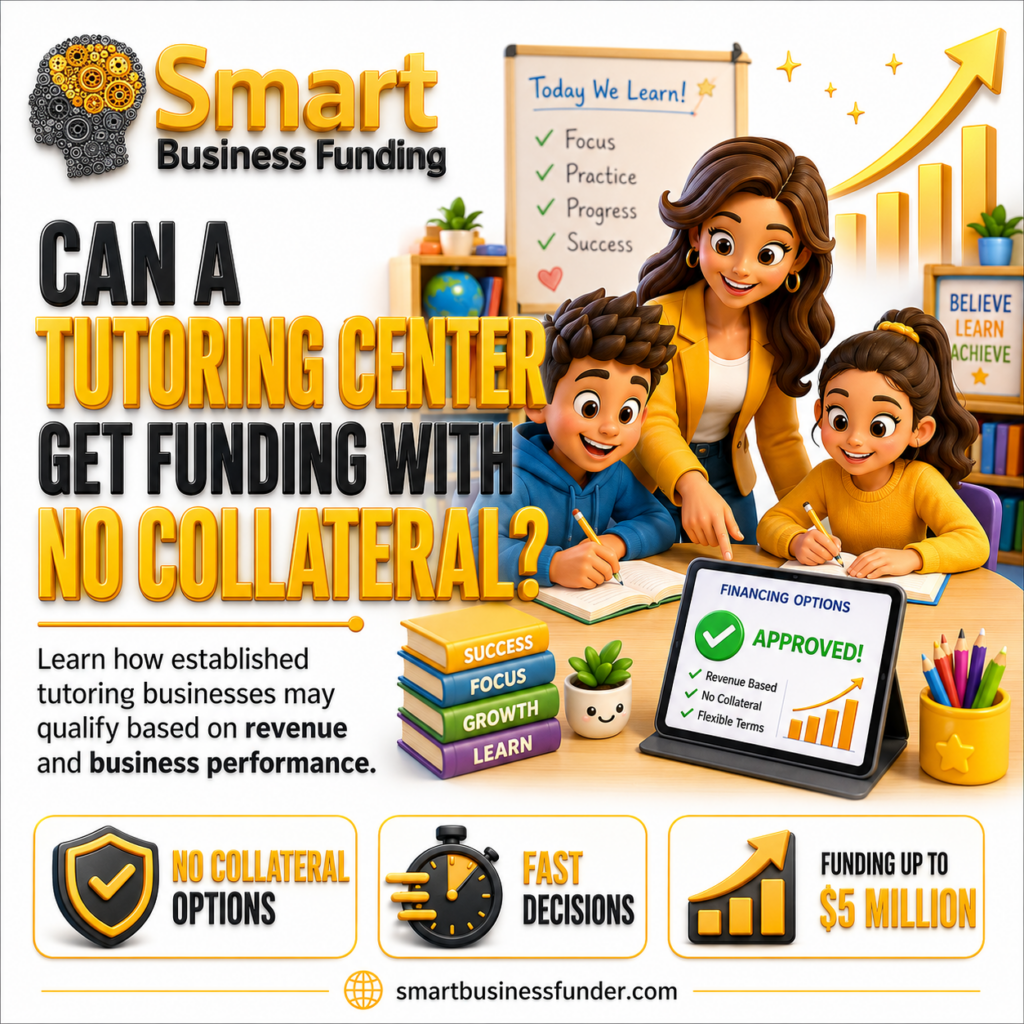
Yes — a tutoring center can qualify for funding through a Merchant Cash Advance (MCA) without pledging specific business assets like equipment, real estate, or inventory as collateral. This is one of the main reasons tutoring centers, which often don’t own much in the way of hard assets, turn to MCA funding over traditional bank loans.
But “no collateral” doesn’t mean “no obligations.” Here’s exactly what that means before you apply.
What “No Collateral” Actually Means
Traditional bank loans and SBA loans typically require you to pledge specific assets — real estate, equipment, or inventory — that the lender can seize if you default. MCA funding through SBF’s Direct Fund Program doesn’t require you to pledge a specific asset. Instead, approval is based on your center’s revenue and cash flow.
For a tutoring center, this matters a lot: most centers don’t own their building, and classroom furniture, tablets, and curriculum licenses aren’t the kind of assets a bank wants as security anyway.
What You Should Know Instead: Personal Guarantees and UCC-1 Filings
This is the part that gets glossed over in a lot of funding marketing, and it shouldn’t be. Even without pledging specific collateral, MCA agreements typically include:
- A personal guarantee (PG): The business owner personally guarantees repayment of the advance. This doesn’t mean a specific asset is pledged, but it does mean the owner has personal liability if the business defaults outside the terms of the agreement.
- A UCC-1 filing: Lenders commonly file a UCC-1 financing statement against the business, which puts other creditors on notice of the lender’s interest in business assets and revenue. This is a public filing, not a lien on a specific piece of property, but it is a real legal encumbrance on the business.
Any funding provider that tells you there are no strings attached whatsoever isn’t giving you the full picture. SBF’s approach is to disclose this upfront rather than let it surprise a business owner mid-agreement.
Why This Structure Works for Tutoring Centers Specifically
Because approval is based on revenue rather than hard assets, a tutoring center that’s generating strong monthly tuition revenue can qualify even in its first couple of years of operation — long before it would have the balance sheet a bank wants to see. The tradeoff is the personal guarantee and UCC-1 filing, not a pledge of your classroom equipment.
SBF’s Direct Fund Program: Eligibility Snapshot
- Funding amount: $10,000–$5,000,000
- Terms: 2–10 months
- Factor rates: 1.25–1.49 for prime-qualified businesses; 1.359–1.499 for higher-risk profiles
- Credit minimum: ~500, soft pull only — checking eligibility doesn’t affect your credit score
- Time in business: 1 year minimum
- Monthly revenue: $50,000/month minimum
- Underwriting: 1–5 hours; same-day or next-day funding common
- Repayment: Daily or weekly
- Positions: 1st through 5th-plus, with side-by-side deals available for centers with existing funding
- All 50 states
Why Banks Handle This Differently — and Slower
Banks and SBA lenders generally require hard collateral, two-plus years of tax returns, and strong personal credit, with underwriting timelines measured in weeks. For a tutoring center that needs to staff up before a specific enrollment window, that mismatch between the funding timeline and the business need is often the deciding factor in choosing MCA funding instead.
Industries We Fund
This same no-hard-collateral structure applies across SBF’s funded industries, including fitness, beauty and personal services, distribution, and contractor businesses.
Frequently Asked Questions
Do I have to put up my tutoring center’s equipment as collateral? No. The Direct Fund Program doesn’t require pledging specific business assets as collateral. A personal guarantee and UCC-1 filing are standard instead.
What’s the difference between a UCC-1 filing and traditional collateral? Traditional collateral pledges a specific asset a lender can seize. A UCC-1 filing is a public notice of the lender’s interest in business assets and revenue generally — it’s a broader legal claim, not a lien tied to one specific piece of property.
Is a personal guarantee the same as collateral? No. A personal guarantee makes the business owner personally liable for repayment; it doesn’t pledge a specific asset the way traditional collateral does.
Can a newer tutoring center qualify without collateral? Yes, as long as it meets the one-year time-in-business and $50,000/month revenue minimums — collateral isn’t the deciding factor either way.
Related Reading
Planning to hire ahead of fall enrollment? 7 Signs Your Tutoring Center Needs Funding Before Back-to-School Rush covers the warning signs to watch for.
Considering a second or third location? How Much Does It Actually Cost to Scale a Tutoring Center From 1 Location to 3? breaks down real expansion costs.
Get a Clear Answer on Your Eligibility
If you want to know exactly what a funding agreement would look like for your tutoring center — including the personal guarantee terms — a soft-pull eligibility check won’t affect your credit score.
Call 1-866-Re-Smart | Email Info@SmartBusinessFunder.com | 2420 NE 186th Street, Suite 401, North Miami Beach, FL 33160