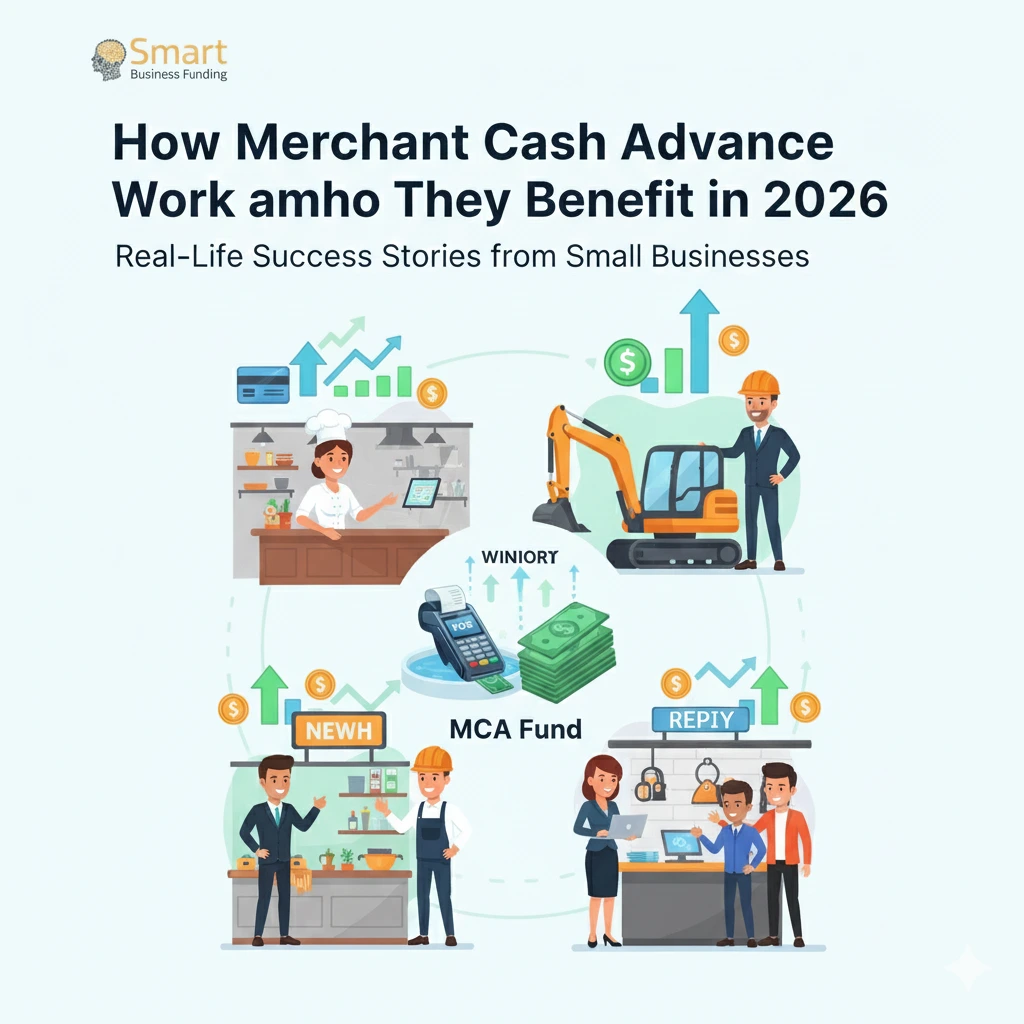
MCA Explained: How Merchant Cash Advances Work and Who They Benefit in 2026
For many small business owners, access to fast, flexible capital can be the difference between surviving and scaling. As traditional lending continues to tighten and approval timelines stretch longer, Merchant Cash Advances (MCAs) have emerged as a popular alternative funding option — especially heading into 2026, when speed and adaptability matter more than ever.
In this guide, we’ll break down how Merchant Cash Advances work, who they benefit most, and why MCAs continue to grow in popularity in 2026. Whether you’re planning for growth, managing cash flow gaps, or preparing for a busy season, this article will help you decide if an MCA is the right move for your business.
What Is a Merchant Cash Advance?
A Merchant Cash Advance is not a traditional loan. Instead of borrowing money with interest and fixed monthly payments, a business receives a lump sum of capital in exchange for a portion of its future sales.
Repayment happens automatically through a percentage of daily or weekly revenue, usually pulled directly from credit card sales or bank deposits. This structure makes MCAs especially attractive to businesses with fluctuating income.
In simple terms:
- You receive cash upfront
- You repay based on performance, not a fixed schedule
- Payments rise and fall with your sales
How Merchant Cash Advances Work in 2026
While the core structure of MCAs hasn’t changed, 2026 brings more streamlined processes, better transparency, and faster approvals than ever before.
Here’s how the process typically works:
1. Application & Revenue Review
Instead of focusing heavily on credit scores, MCA providers review:
- Monthly revenue
- Sales consistency
- Time in business
- Industry type
This makes MCAs accessible to businesses that may not qualify for bank loans.
2. Approval & Funding
Once approved, funds are often deposited within 24–48 hours. This speed is a major reason MCAs remain in demand in 2026.
3. Repayment Through Sales
Repayment is collected as a fixed percentage of revenue. When sales are strong, repayment happens faster. When sales slow down, payments decrease.
This flexibility helps business owners manage cash flow without the pressure of fixed monthly payments.
Key Benefits of Merchant Cash Advances
Merchant Cash Advances continue to thrive in 2026 because they solve real-world problems small businesses face.
✅ Fast Access to Capital
When opportunities or emergencies arise, waiting weeks for a bank decision isn’t realistic. MCAs offer speed when it matters most.
✅ Flexible Repayment
Payments adjust based on sales volume, making MCAs ideal for businesses with seasonal or variable revenue.
✅ Easier Qualification
Credit challenges, limited collateral, or short business history don’t automatically disqualify applicants.
✅ No Fixed Monthly Bills
This gives owners breathing room during slower periods.
Who Benefits Most from an MCA in 2026?
Merchant Cash Advances are not for every business — but for the right type, they can be a powerful tool.
Retail & E-Commerce Businesses
- Inventory restocks
- Flash sales preparation
- Seasonal demand spikes
Restaurants & Hospitality
- Equipment repairs
- Staffing needs
- Renovations or expansions
Service-Based Businesses
- Marketing campaigns
- Payroll gaps
- Short-term operating expenses
Seasonal Businesses
Businesses that experience high-revenue months followed by slower periods benefit greatly from revenue-based repayment.
Common Uses for Merchant Cash Advances
In 2026, business owners are using MCAs strategically, not just reactively. Common use cases include:
- Purchasing inventory ahead of peak seasons
- Launching marketing and advertising campaigns
- Covering payroll during growth phases
- Managing unexpected expenses
- Expanding to new locations or services
The key is using MCA funds for revenue-generating activities, not long-term liabilities.
MCA vs Traditional Business Loans in 2026
| Feature | Merchant Cash Advance | Traditional Loan |
|---|---|---|
| Approval Speed | Fast (often 1–2 days) | Slow (weeks or months) |
| Credit Requirements | Flexible | Strict |
| Repayment | Based on sales | Fixed monthly |
| Best For | Short-term needs | Long-term financing |
While traditional loans may offer lower costs over time, they’re often inaccessible or too slow for many small businesses. MCAs fill that gap.
What to Consider Before Choosing an MCA
Before moving forward with a Merchant Cash Advance, business owners should consider:
- Total payback amount, not just the advance size
- Daily or weekly cash flow impact
- Short-term vs long-term needs
Working with a transparent funding partner helps ensure the MCA aligns with your business goals.
Companies like Smart Business Funding focus on educating business owners, offering clear terms, and matching funding solutions to real business needs — not just approvals.
Why Merchant Cash Advances Will Continue to Grow in 2026
Several trends are fueling MCA demand this year:
- Rising costs and tighter bank lending
- Increased need for fast working capital
- More digital, streamlined funding platforms
- Growing acceptance of alternative financing
As businesses prioritize agility and speed, MCAs remain a key funding solution.
Final Thoughts: Is an MCA Right for Your Business?
Merchant Cash Advances can be a powerful tool when used correctly. In 2026, they offer:
- Speed
- Flexibility
- Accessibility
If your business needs fast capital, has consistent sales, and plans to use funds for growth or cash flow stability, an MCA may be worth exploring.
The most important step is working with a funding partner who prioritizes clarity, speed, and your long-term success.