
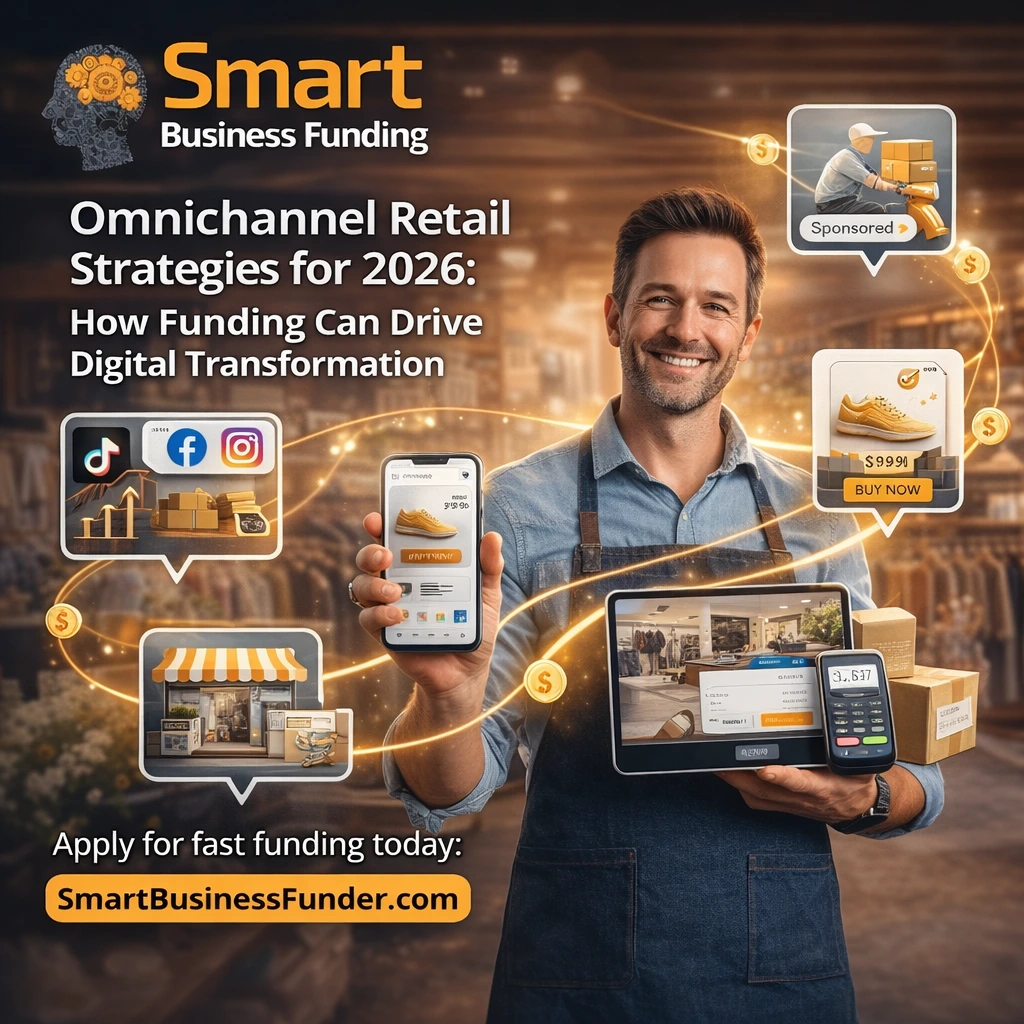
Omnichannel Retail Strategies for 2026: How Funding Can Drive Digital Transformation
Retail in 2026 is no longer about choosing between online or in-store.
The future belongs to omnichannel retailers—brands that seamlessly connect physical stores, e-commerce, mobile apps, social media, and delivery platforms into one unified customer experience.
But going omnichannel isn’t cheap. It requires technology, infrastructure, marketing, and operational upgrades—all of which demand capital.
That’s where fast business funding becomes a competitive weapon.
In this guide, we’ll break down:
- What omnichannel retail really means in 2026
- The top retail trends driving digital transformation
- The real costs involved
- How funding helps retailers scale faster
- Why acting now matters more than ever
What Is Omnichannel Retail in 2026?
Omnichannel retail means creating a connected shopping experience across every touchpoint, including:
- Brick-and-mortar stores
- E-commerce websites
- Mobile apps
- Social commerce (Instagram, TikTok Shop, Facebook)
- Marketplaces (Amazon, Walmart, Etsy)
- Curbside pickup & local delivery
- In-store kiosks and self-checkout
In 2026, customers expect:
✔ Real-time inventory visibility
✔ One-click checkout across platforms
✔ Buy-online-pickup-in-store (BOPIS)
✔ Fast, flexible delivery
✔ Personalized offers and loyalty rewards
✔ Seamless returns across all channels
Retailers who can’t deliver this experience are losing customers to competitors who can.
Why Omnichannel Retail Is Exploding in 2026
Several powerful trends are accelerating omnichannel adoption:
1. Consumers Demand Convenience
Shoppers want to browse on their phone, buy on their laptop, and pick up in-store—or get same-day delivery.
2. Social Commerce Is a Major Sales Channel
TikTok Shop, Instagram Checkout, and influencer-driven sales now generate billions in retail revenue.
3. AI Is Personalizing the Shopping Experience
AI-powered product recommendations, chatbots, and predictive inventory are now standard.
4. Retail Margins Are Under Pressure
Omnichannel retailers spread risk across multiple revenue streams instead of relying on foot traffic alone.
5. Data-Driven Retail Is the New Norm
Customer data from multiple platforms enables smarter pricing, promotions, and inventory planning.
The Real Costs of Omnichannel Digital Transformation
Going omnichannel requires real investment. Here’s where most retailers spend capital:
1. E-Commerce Platform Upgrades
- Website redesign
- Mobile optimization
- Faster checkout systems
- Subscription features
Estimated cost: $10,000–$100,000+
2. POS & Inventory Integration
- Unified POS systems
- Real-time inventory syncing
- Order management software
Estimated cost: $5,000–$50,000+
3. Digital Marketing & Customer Acquisition
- Paid ads
- Influencer partnerships
- SEO
- Email & SMS automation
Estimated cost: $5,000–$100,000+
4. Fulfillment & Logistics Infrastructure
- Warehouse upgrades
- Shipping software
- Local delivery services
- Return processing systems
Estimated cost: $10,000–$200,000+
5. In-Store Technology
- Self-checkout kiosks
- Digital signage
- Smart shelves
- Mobile POS
Estimated cost: $5,000–$75,000+
How Funding Accelerates Retail Digital Transformation
Waiting for profits to fund growth is no longer realistic in 2026. The retailers winning right now are moving fast—not waiting on banks.
Here’s how fast business funding fuels omnichannel success:
1. Launch New Sales Channels Quickly
Instead of delaying expansion into social commerce or marketplaces, funding lets you move immediately.
2. Upgrade Tech Without Draining Cash Flow
You can modernize your POS, inventory systems, and website without wiping out working capital.
3. Scale Marketing Aggressively
Retailers who invest in digital ads, influencer campaigns, and loyalty programs dominate market share faster.
4. Improve Fulfillment Speed
Funding enables you to optimize shipping, add same-day delivery, and reduce cart abandonment.
5. Stay Ahead of Competitors
Early adopters capture customers while slow-moving retailers lose relevance.
How Much Capital Do Retailers Need in 2026?
Most omnichannel retail upgrades require between:
$25,000 to $500,000+, depending on:
- Number of locations
- Current tech stack
- E-commerce maturity
- Marketing goals
- Fulfillment complexity
- Growth speed
Traditional bank loans are often too slow, too rigid, and too restrictive for modern retail needs.
That’s why more retailers are choosing fast business funding instead.
Why Retailers Choose Smart Business Funder
Smart Business Funder specializes in helping retailers fund digital transformation quickly and flexibly.
With Smart Business Funder, you get:
✅ Fast approvals (often within 24 hours)
✅ Minimal paperwork
✅ Flexible use of funds
✅ Options even with less-than-perfect credit
✅ Funding for marketing, tech, inventory, or expansion
✅ No rigid bank restrictions
Whether you’re upgrading your POS, launching a mobile app, or expanding into TikTok Shop, Smart Business Funder helps you move faster than your competition.
The ROI of Omnichannel Retail
When executed properly, omnichannel retailers see:
- Higher customer lifetime value
- Lower churn
- Increased conversion rates
- Stronger brand loyalty
- Better inventory turnover
- Higher profit margins
- Faster revenue growth
Retailers who invest now are positioning themselves to dominate their niche through 2026 and beyond.
Final Thoughts
Omnichannel retail is no longer optional—it’s survival.
In 2026, customers expect speed, personalization, and convenience across every platform. If your retail business isn’t evolving, it’s falling behind.
Fast funding allows you to:
- Modernize your operations
- Launch new revenue channels
- Outpace competitors
- Build a future-proof retail brand
Call to Action (For Smart Business Funder Website)
Ready to transform your retail business for 2026?
Smart Business Funder provides fast, flexible funding to help retailers upgrade technology, expand online, and scale omnichannel sales—often within 24 hours.
👉 Apply now to fund your digital transformation and grow your retail business faster.