
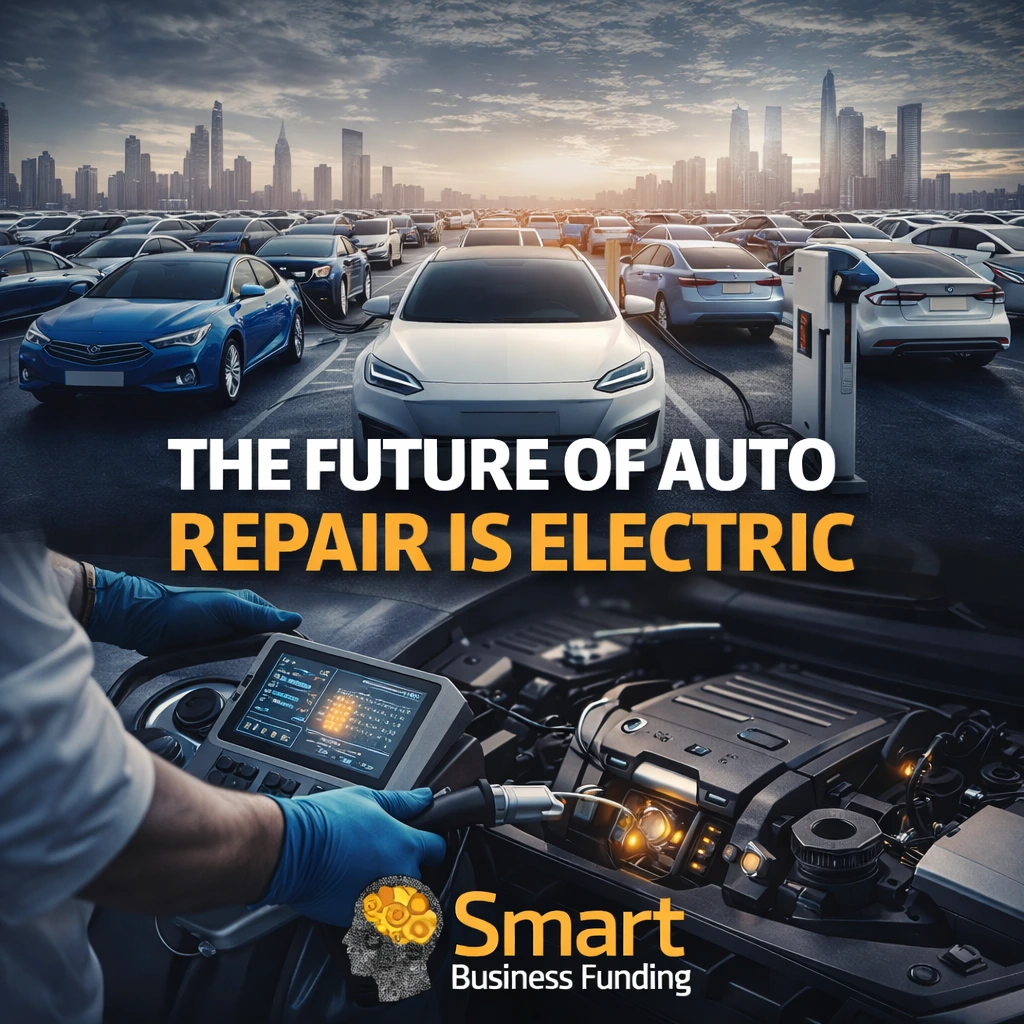
How EV Growth Will Impact Auto Repair Shops in 2026
What Every Shop Owner Must Know to Stay Profitable
Electric vehicles (EVs) are no longer a niche trend — they are becoming a dominant force reshaping the entire automotive industry. By 2026, EV adoption is expected to accelerate dramatically due to government incentives, falling battery costs, stricter emissions regulations, and major automaker commitments to electrification.
For auto repair shop owners, this shift is not theoretical — it is operational, financial, and strategic.
Some shops will thrive in the EV era. Others will struggle to survive.
This guide explains exactly how EV growth will impact auto repair businesses in 2026 — and what smart shop owners must do now to stay competitive, profitable, and relevant.
The EV Surge Is Already Happening
By 2026, electric vehicles will represent a significantly larger share of new car sales in most developed markets. Many manufacturers are reducing or eliminating internal combustion engine (ICE) development entirely.
What this means for repair shops:
- More EVs entering service cycles
- Fewer traditional engine repairs over time
- New types of maintenance demands
- New equipment and training requirements
- Changing revenue models
The transition will not happen overnight — but 2026 is a major turning point.
EVs Require Less Routine Maintenance — And That Changes Revenue
One of the biggest differences between EVs and gasoline vehicles is mechanical simplicity.
Electric vehicles have:
- No oil changes
- No spark plugs
- No fuel injectors
- No timing belts
- Fewer moving engine components
- Reduced transmission complexity
Traditional repair shops earn a large percentage of recurring revenue from routine engine-related maintenance. As EV adoption grows, that predictable service income declines.
Revenue Impact for Auto Shops in 2026
Shops heavily dependent on routine engine maintenance may see:
- Fewer repeat visits
- Longer service intervals
- Lower parts replacement frequency
- Reduced preventive maintenance revenue
However — EVs do not eliminate service needs. They shift them.
New High-Demand EV Service Opportunities
While EVs reduce some traditional repairs, they create entirely new service categories.
By 2026, the following services will be in high demand:
Battery System Diagnostics and Maintenance
The battery is the most expensive and complex component of an EV. Shops that can safely inspect, test, and maintain battery systems will command premium pricing.
High-Voltage System Repairs
EV electrical systems operate at much higher voltages than traditional vehicles. Specialized knowledge and equipment are required.
Thermal Management Systems
Battery cooling systems are critical for performance and safety. These systems require inspection, repair, and replacement.
Regenerative Braking Systems
EV braking systems operate differently and require specialized service procedures.
Software Diagnostics and Updates
Many EV issues are software-related. Advanced diagnostic capabilities will become essential.
Tire Replacement and Suspension Wear
EVs are heavier and produce instant torque, which accelerates tire and suspension wear — creating recurring service opportunities.
The Skills Gap Will Separate Profitable Shops from Struggling Ones
EV servicing requires new technical competencies.
In 2026, repair shops that invest in training will gain a major competitive advantage. Shops that do not will be forced to turn away EV customers.
Critical training areas include:
- High-voltage safety procedures
- Battery system diagnostics
- EV powertrain architecture
- Advanced digital diagnostic platforms
- Electrical system troubleshooting
Technicians trained only in traditional engine repair will face a shrinking market.
Equipment Upgrades Will Be Mandatory — Not Optional
Servicing electric vehicles safely requires specialized equipment. This is one of the biggest financial barriers many repair shops face.
Key investments include:
- Insulated tools rated for high voltage
- EV-compatible diagnostic scanners
- Battery lifting and handling systems
- Personal protective equipment (PPE)
- Charging system testing tools
- Electrical isolation equipment
These are not minor upgrades — they represent significant capital investments.
By 2026, shops without proper equipment may be legally restricted from performing certain EV repairs due to safety regulations.
Insurance and Liability Risks Are Increasing
Working on EVs carries unique risks:
- High-voltage exposure
- Battery fire hazards
- Thermal runaway incidents
- Specialized storage requirements
Insurance providers are already adjusting policies based on EV servicing capability and safety compliance.
Shops that fail to adopt proper procedures may face:
- Higher insurance premiums
- Coverage limitations
- Increased liability exposure
Proper training and equipment are not just operational decisions — they are risk management requirements.
Competition Will Intensify — But Opportunity Is Massive
Many traditional repair shops are delaying EV adaptation because they believe adoption is still “too early.”
This hesitation creates a massive opportunity.
In many regions, EV owners already struggle to find qualified independent repair providers. Dealership service departments cannot handle all demand.
Early adopters will benefit from:
- Premium pricing power
- Limited local competition
- Higher customer retention
- Reputation as EV specialists
- Long-term market positioning
The shops that move first will dominate their markets.
Consumer Expectations Are Changing Fast
EV owners expect different service experiences:
- Digital diagnostics and reporting
- Faster turnaround times
- Transparent pricing
- Technologically advanced facilities
- Certified EV technicians
Repair shops that position themselves as modern, high-tech service providers will attract higher-value customers.
The Biggest Financial Challenge: Transition Costs
The shift to EV service capability requires investment.
Major cost categories include:
- Technician certification programs
- Specialized tools and equipment
- Facility modifications
- Insurance adjustments
- Software and diagnostic systems
- Marketing repositioning
Many shop owners delay EV adoption because of upfront costs — but delaying may cost far more in lost revenue.
By 2026, shops that fail to adapt risk losing relevance as EV market share grows.
How Smart Auto Repair Shops Are Preparing for 2026
Forward-thinking shop owners are already implementing strategic transitions:
1. Training Technicians Now
Certification and technical training take time. Early preparation prevents future capacity gaps.
2. Phasing Equipment Investments
Rather than one large expense, successful shops are upgrading equipment in stages.
3. Marketing EV Service Capabilities
Positioning as an EV-ready repair facility builds brand authority early.
4. Diversifying Service Offerings
Shops are expanding into diagnostics, electronics, and advanced system repairs.
5. Securing Growth Funding
Many shops are using business financing to modernize facilities and accelerate EV readiness.
The Risk of Waiting Too Long
Some repair shops assume EV adoption will remain slow and choose to wait.
This is risky for several reasons:
- Customer expectations are changing quickly
- Competitors are upgrading now
- Equipment and training costs may rise
- Insurance requirements may tighten
- Market share shifts are hard to reverse
By the time EV demand becomes unavoidable, early adopters may already control the market.
The Future of Auto Repair in 2026 and Beyond
Electric vehicles will not eliminate the auto repair industry — but they will transform it.
The most profitable repair businesses in 2026 will be those that:
- Embrace technical specialization
- Invest in training and equipment
- Position themselves as advanced service providers
- Adapt to changing vehicle technology
- Plan financially for long-term transition
Auto repair is evolving from mechanical service to high-tech vehicle systems management.
Final Thoughts: Adaptation Is the New Competitive Advantage
The growth of electric vehicles is not a temporary trend — it is a structural shift in transportation.
For auto repair shop owners, 2026 represents a decision point:
- Adapt and grow with the industry
- Or remain tied to a shrinking segment of the market
The shops that prepare now will secure long-term profitability, customer loyalty, and market leadership.
The EV era is not coming — it is already here.
The only question is whether your repair business will be ready.